

Many UK business owners believe a full redesign is the only way to fix website problems, but transparent maintenance services starting at £199 per month often provide more cost-effective solutions. Understanding the difference between ongoing maintenance and one-off redesign projects helps you make informed decisions that protect your budget whilst keeping your website secure, fast, and competitive in 2026.
Table of Contents
- Understanding Website Maintenance And Redesign
- Cost Structures And Pricing Models In The UK
- When To Choose Maintenance Vs Redesign
- Service Models That Enhance Transparency And Efficiency
- Practical Implications For Small And Medium UK Businesses
- Common Misconceptions About Website Maintenance Vs Redesign
- Discover Maintaina — Managed Website Maintenance For UK Businesses
Key takeaways
| Point | Details |
|---|---|
| Maintenance provides ongoing security and updates | Regular upkeep keeps websites secure at predictable monthly costs |
| Redesign tackles major structural changes | One-time projects costing £5,000 to £20,000 address branding and functionality |
| Transparent capped pricing prevents surprises | Fixed quotes approved before work eliminate unexpected invoices |
| Most issues resolve through maintenance | Many problems don't require expensive redesign investments |
| Choice impacts SEO and business continuity | Right decision affects rankings, uptime, and long-term budget control |
Understanding website maintenance and redesign
Website maintenance and redesign serve distinctly different purposes, yet many UK SMB owners confuse the two when facing website challenges. Knowing the core differences helps you allocate resources effectively.
Website maintenance involves ongoing updates, security patches, issue resolution, and performance optimisation. It's a continuous service that keeps your website functioning properly day after day. Security updates protect against emerging threats. Minor fixes address broken links, outdated content, or plugin conflicts. Regular backups ensure you can recover from unexpected problems quickly.
Redesign represents a comprehensive project that fundamentally changes your website's appearance, structure, or functionality. This one-off investment tackles major branding shifts, complete user experience overhauls, or structural rebuilds when your current platform can't meet evolving business needs. Redesigns typically take weeks or months to complete and require significant planning.
Both approaches matter for different reasons:
- Maintenance preserves and improves what you already have
- Redesign creates something substantially new when fundamental changes are necessary
- Maintenance prevents problems whilst redesign solves structural limitations
- Combining both strategically maximises your managed website maintenance investment over time
Think of maintenance as servicing your car regularly, whilst redesign is buying a new vehicle when the old one no longer meets your needs.
Cost structures and pricing models in the UK
Understanding realistic costs helps you budget appropriately and avoid surprises when planning website care. UK pricing varies based on complexity, business size, and service scope.
Small business maintenance plans in the UK typically start around £199/month covering basic security, backups, and updates. These entry-level packages suit straightforward business websites with modest traffic. More complex websites with e-commerce functionality, custom integrations, or high traffic volumes require higher-tier plans.
Maintenance costs for complex websites can range from £300 to £24,000 per year, whilst redesigns cost between £5,000 and £20,000. This significant upfront expense reflects the labour-intensive nature of rebuilding websites from scratch.
| Service type | Typical UK cost range | Payment structure |
|---|---|---|
| Basic maintenance | £199 to £500/month | Monthly subscription |
| Complex maintenance | £500 to £2,000/month | Monthly subscription |
| Small business redesign | £5,000 to £10,000 | One-time project fee |
| Enterprise redesign | £10,000 to £20,000+ | One-time project fee |
Capped-price models offer particular advantages for budget-conscious businesses. These transparent pricing structures provide a maximum cost estimate before work begins. You approve quotes, avoiding unexpected invoices that can derail financial planning.
Key pricing considerations include:
- Website complexity directly affects maintenance costs
- E-commerce sites require more intensive security and updates
- Custom functionality increases both maintenance and redesign expenses
- Transparent website maintenance plans with fixed pricing build trust
Pro tip: Request detailed breakdowns showing exactly what each service tier includes, then match features to your actual business needs rather than paying for unused capabilities.
When to choose maintenance vs redesign
Identifying the right approach saves money and prevents frustration. Clear indicators help you determine which path suits your current situation.
Maintenance excels at handling security updates, plugin compatibility fixes, content updates, speed optimisation, and minor design tweaks. These ongoing needs keep websites running smoothly without major structural changes. Regular maintenance prevents small issues from escalating into expensive emergencies.
Redesign becomes necessary when fundamental problems exist. Most websites do not require redesign unless there are fundamental issues like outdated branding, poor user experience, or technical limitations. Your website might need redesign if it fails to display properly on mobile devices, looks visually dated compared to competitors, or can't support new business functions you want to add.
Many business owners assume redesign fixes everything, but this costly assumption often proves wrong. A slow website might only need hosting upgrades or image optimisation, not a complete rebuild. Poor search rankings might improve through content updates and technical SEO fixes rather than redesign.
Signs maintenance is sufficient:
- Website functions properly but needs regular updates
- Design remains modern and user-friendly
- Security patches and backups are your primary concern
- Budget constraints favour predictable monthly costs
Signs redesign is necessary:
- Website looks outdated and damages brand perception
- Mobile responsiveness is poor or non-existent
- Bounce rates are high due to confusing navigation
- Platform limitations prevent adding needed functionality
Balancing both approaches strategically maximises value. Regular website maintenance benefits extend your website's useful life, whilst periodic redesigns keep you competitive as technology and design trends evolve.
Service models that enhance transparency and efficiency
Modern maintenance services have evolved beyond basic technical support to offer client-centric features that improve trust and streamline issue resolution. These service innovations particularly benefit UK SMBs seeking predictability.
Client portals centralise every aspect of website care in one accessible location. You report issues in plain English without technical jargon. The portal tracks your request from submission through resolution, providing status updates automatically. Quotes, invoices, and communication history remain organised and searchable.
Transparent maintenance services offering fixed capped quotes and client approval before work mitigate unexpected costs and build trust. This approval workflow ensures you control spending completely. No work begins until you've reviewed and accepted the quoted price, eliminating surprise invoices that traditional time-and-materials billing often produces.
Priority handling accelerates critical issue resolution. When your website goes down or security threats emerge, priority support ensures rapid response. Efficient workflows with client portals reduce response times and enhance transparency, directly impacting your business continuity.
Key transparency features to seek:
- Clear pricing structures with maximum cost caps
- Plain-language explanations of technical issues
- Real-time status updates on ongoing work
- Consolidated billing showing exactly what you're paying for
- Direct communication channels without complicated ticketing systems
These service model improvements transform maintenance from a frustrating necessity into a manageable business function. Choosing client portal maintenance services with these features maximises budget control whilst ensuring your website receives prompt, professional attention.
Pro tip: Test a provider's portal during initial consultations by submitting a sample issue, evaluating how quickly they respond and how clearly they communicate the solution and pricing.
Practical implications for small and medium UK businesses
Your choice between maintenance and redesign creates ripple effects across multiple business areas. Understanding these practical implications helps you align website decisions with broader business goals.
Website maintenance extends the life of a site by keeping it secure, updated, and optimised, preventing costly downtime and SEO penalties. Search engines favour websites that load quickly, remain secure, and provide current information. Regular maintenance directly supports these ranking factors, protecting the organic traffic that drives leads and sales.
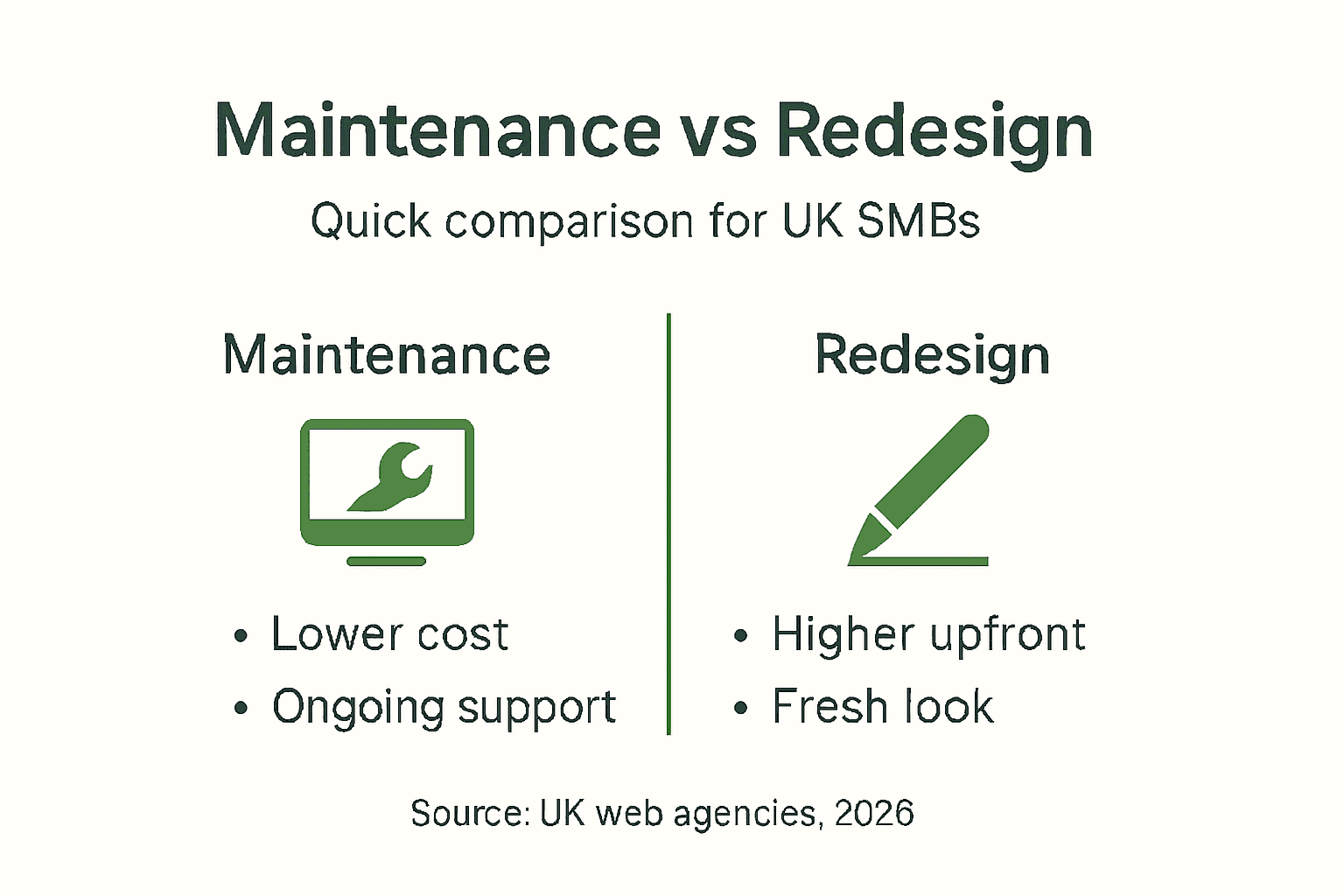
Redesign allows fundamental improvements but comes with trade-offs. The higher upfront investment delivers rebranding opportunities, improved user experience, and expanded functionality. However, redesign projects temporarily disrupt normal operations and require longer timelines before benefits materialise.
| Factor | Maintenance impact | Redesign impact |
|---|---|---|
| Budget | Predictable monthly costs | Large upfront investment |
| Timeline | Immediate ongoing benefits | Weeks or months to complete |
| Business continuity | Minimal disruption | Temporary interruption possible |
| SEO | Preserves and improves rankings | Risk of ranking drops during transition |
| Flexibility | Adaptable to changing needs | Fixed scope requires planning |
Combining both approaches strategically optimises your website's contribution to business growth. Routine maintenance keeps your current site performing well, whilst periodic redesigns every three to five years ensure you remain competitive as technology advances.
Wrong choices create unnecessary costs and missed opportunities. Neglecting maintenance leads to security breaches, downtime, and gradual performance degradation that damages user experience. Unnecessary redesigns waste budgets that could fund marketing, inventory, or staff development.
Review your website performance regularly following these steps:
- Monitor key metrics like page speed, uptime, and conversion rates monthly
- Survey customers about website usability and ease of navigation
- Compare your design and functionality to direct competitors quarterly
- Assess whether current platform meets evolving business requirements
- Calculate total cost of ownership including maintenance, hosting, and updates
- Decide whether incremental improvements or fundamental redesign makes financial sense
Balancing short-term budgets with long-term strategic goals produces optimal outcomes. The benefits of website maintenance compound over time, whilst well-timed redesigns position your business for growth phases.
Common misconceptions about website maintenance vs redesign
Clearing up frequent misunderstandings empowers better decision-making and prevents costly mistakes that UK business owners often make.
Misconception one: redesign always fixes website problems. Many website problems can be solved with maintenance rather than redesign. Slow loading speeds often result from unoptimised images or outdated plugins, not fundamental design flaws. Security vulnerabilities typically require patches and updates, not complete rebuilds. Before committing to expensive redesigns, thoroughly investigate whether targeted maintenance addresses your specific issues.
Misconception two: maintenance can't improve SEO. Maintenance can improve SEO through updates and technical fixes, contrary to belief it cannot. Regular content updates, broken link repairs, mobile optimisation, and speed improvements all boost search rankings. These incremental enhancements accumulate significant SEO value over time without redesign costs.
Misconception three: maintenance is just minor technical work. Modern maintenance encompasses security monitoring, performance optimisation, content updates, user experience improvements, and strategic recommendations. Comprehensive maintenance services function as ongoing partnerships that actively contribute to business success.
Misconception four: redesign provides better long-term ROI. Whilst redesign delivers dramatic improvements, neglecting maintenance between redesigns erodes that value rapidly. Regular upkeep typically offers superior return on investment by preventing problems, extending website lifespan, and maintaining consistent performance.
Other common misunderstandings include:
- Assuming all maintenance services offer the same quality and transparency
- Believing website problems will resolve themselves without intervention
- Thinking redesign is quicker than incremental maintenance improvements
- Overlooking how poor maintenance damages brand reputation and customer trust
Understanding these common misconceptions about maintenance helps you evaluate options objectively. Base decisions on your specific business needs, current website condition, and realistic budget constraints rather than assumptions or incomplete information.
Discover Maintaina — managed website maintenance for UK businesses
Now that you understand the critical differences between maintenance and redesign, consider how professional managed services simplify these decisions whilst protecting your budget.
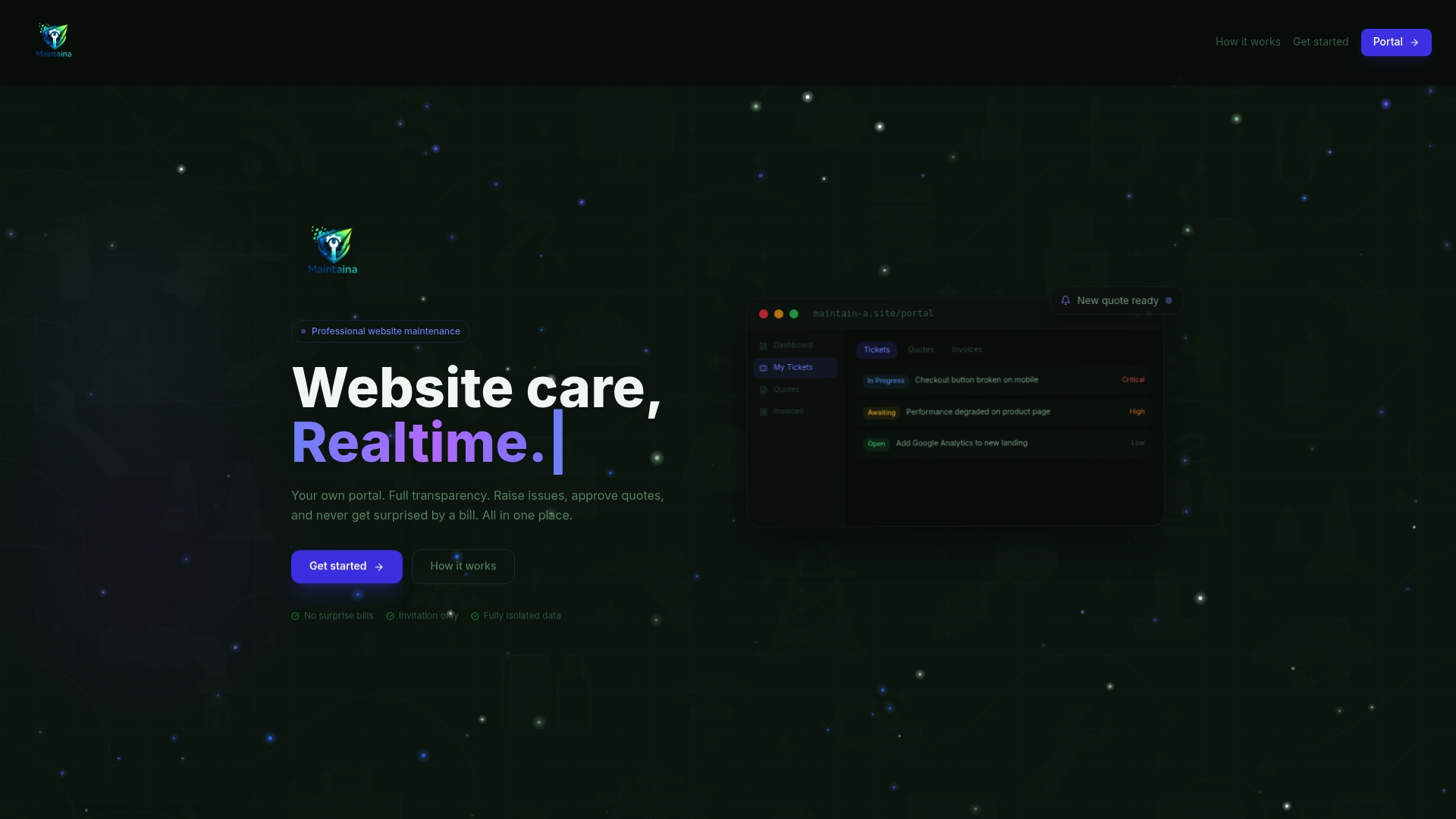
Maintaina offers transparent, capped-price website maintenance plans designed specifically for UK small and medium businesses. Our client portal consolidates issue reporting, quote approval, invoicing, and communication in one intuitive platform, eliminating confusion and surprise costs.
Every maintenance request receives a fixed maximum quote before work begins. You approve or decline based on clear pricing, maintaining complete budget control. This transparent approach builds trust whilst ensuring your website receives the security updates, performance optimisation, and technical support it needs.
Our focus on rapid response times and priority handling of critical issues minimises downtime that could cost you customers. Security remains paramount through regular monitoring, updates, and isolated private portals that protect your confidential business information.
Explore flexible Maintaina managed website maintenance plans that match your business size and website complexity. Choose a trusted partner committed to keeping your website reliable, secure, and optimised year-round without inflated bills or hidden fees.
FAQ
When should I prioritise website maintenance over redesign?
Prioritise maintenance when your website functions well but needs regular security updates, content changes, or performance optimisation. If the design remains modern and user-friendly, maintenance extends your website's useful life cost-effectively. Redesign becomes necessary only when fundamental structural problems, outdated branding, or poor mobile responsiveness actively harm your business.
How does capped pricing protect me from unexpected costs?
Capped pricing provides a fixed maximum cost estimate before any work begins. You review and approve this quote, knowing exactly what you'll pay. Work only proceeds after your approval, eliminating the surprise invoices that hourly billing often generates. This transparency lets you budget accurately and maintain complete financial control over website maintenance expenses.
Can maintenance really improve my website's SEO?
Yes, regular maintenance directly supports better search rankings through multiple mechanisms. Security updates, speed optimisation, mobile responsiveness improvements, broken link repairs, and fresh content all contribute to SEO performance. These incremental technical and content enhancements accumulate significant ranking benefits over time without requiring expensive redesign projects.
What signs indicate my website needs a full redesign?
Consider redesign when your website looks visually outdated compared to competitors, displays poorly on mobile devices, or suffers from confusing navigation that drives visitors away. Technical limitations preventing you from adding needed business functionality also signal redesign necessity. High bounce rates, declining conversion rates, and negative user feedback about website usability indicate fundamental problems maintenance alone cannot fix.
How often should I plan a redesign alongside regular maintenance?
Most businesses benefit from redesigning every three to five years whilst maintaining continuously between redesigns. This timeline balances staying current with design trends and technology advances against the significant cost of frequent rebuilds. Regular maintenance extends each redesign's value, whilst periodic redesigns ensure your website supports evolving business strategies and customer expectations effectively.